The German EEG: Legacy, limits, and the road ahead for the subsidy scheme
6 min read
April 1, 2025 marked a milestone in Germany’s energy transition: the 25th anniversary of the Renewable Energy Sources Act (EEG). Lauded as a legislative breakthrough when it was introduced in 2000, the EEG fundamentally transformed how renewable energy was integrated into the German power system. It laid the foundation for one of the most successful renewable rollouts worldwide, yet now, a quarter-century later, its core principles are being reevaluated in the face of evolving market dynamics and legal frameworks.
The original EEG was built around three core tenets:
Grid priority for renewable electricity
Guaranteed remuneration for all power fed into the grid
Financing outside the state budget via a surcharge on electricity bills
These principles not only ensured investment certainty but also opened the door to a diverse range of market participants: municipal utilities, farmer cooperatives, and citizen-led initiatives among them. In many ways, it democratized the energy sector.
Fast forward to today, and much has changed. The surcharge model was abolished in 2022 and replaced by budgetary financing supported by CO₂ pricing revenues. That shift brought renewable remuneration under EU state aid rules, with significant consequences. Starting in 2027, projects receiving support must return excess profits, a so-called "claw-back" mechanism. While details are still under discussion, this marks a clear departure from the original guarantee of fixed payments.
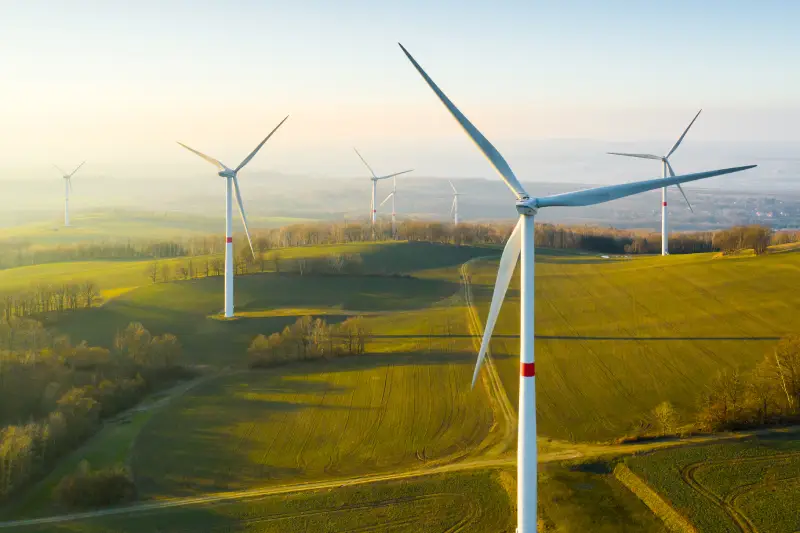
Meanwhile, grid priority has become increasingly complex to implement in a system where renewables now account for roughly 60% of total electricity generation. The sheer scale of renewable feed-in regularly tests the limits of grid infrastructure and market design.
The EEG has moved from ensuring a right to subsidies toward enabling fair participation in the market. This shift is not inherently negative, but it does raise questions about what kind of support remains necessary to maintain investor confidence and long-term planning stability.
Some recent legislative changes, like the so-called Solar Package passed in early 2025, illustrate how this evolution continues. While aimed at addressing practical grid and market challenges, such as periods of negative prices, they have also altered remuneration rules in ways that make some investors uneasy.
The new rules stipulate, for example, that no payment will be made for electricity produced during negative price intervals. This may seem like a rational market correction, but it directly undermines the original “priority and guaranteed payment” logic of the EEG. Even small-scale producers now face more volatility than in previous years.
One of the EEG’s proudest achievements has been its ability to encourage broad participation in the energy transition. From rooftop solar systems to cooperatively owned wind farms, the diversity of actors has been essential in building social acceptance and financial resilience.
This diversity is now under pressure. As the market matures, entry barriers are rising, not only due to increased technical complexity, but also because of growing risks linked to price exposure and uncertain remuneration models. Financial institutions have voiced concern, their message was clear: without a stable regulatory foundation, actor diversity will suffer.
Despite its erosion in some areas, the EEG is not considered obsolete. If anything, its constant adaptation is a testament to its foundational role in the energy transition. New challenges will always arise, whether they relate to integrating battery storage, enabling flexible consumption, or aligning national rules with EU aid law.
This does not mean clinging to outdated mechanisms. Rather, the EEG must evolve in ways that preserve its achievements while addressing new realities. Key among them: how to support flexibility across generation, storage, and demand; how to ensure predictable investment conditions in volatile markets; and how to sustain a broad and diverse set of market participants.
As Germany moves toward a decarbonized power sector, the framework underpinning that transition must be resilient. The EEG, for all its complexity, still represents a critical pillar. But its future will depend on whether policymakers can balance market efficiency with long-term certainty, and whether they choose to foster inclusivity over consolidation.
At Re-Twin we include revenue streams from the subsidy and show how the project business case is impacted by it. Create an account an exlopre it yourself: https://app.re-twin.energy/
About the Author
Florian Heise
Florian Heise is a energy-industry specialist with experience in consulting, logistics tech, and green-hydrogen development. As former head of strategic projects, he researched BESS and energy-storage markets across Germany and the EU. Today, he uses that knowledge as co-founder of Re-Twin Energy. Florian holds a Master’s in Finance & Accounting from Freie Universität Berlin and has even run a small coffee-import venture.
Ready to Transform Your Energy Strategy?
Unlock the full potential of your energy assets with Re-Twin Energy's cutting-edge Analytics & AI platform